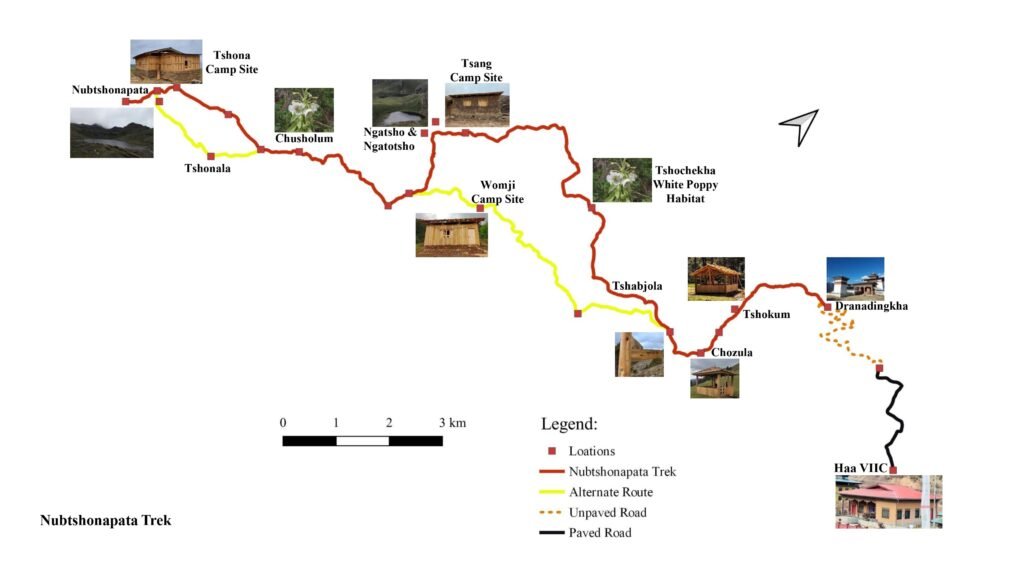
The Nubtshonapata Trek winds 21.3 km through the pristine Haa Valley from and back to Kajena Village, offering trekkers a glimpse of Haa’s most stunning highland landscapes. This is one of Haa’s most scenic and popular trekking trails. Over 5 days (4 nights) of camping, hikers climb steadily from fir and juniper forests into alpine meadows. Daily walks of roughly 6–7 hours cover altitudes from about 3,278 m to 4,200 m. Trekkers spend each night under nightsky canvases beside mountain streams or lakes, using tents and support crews to carry gear.
Highlights: Endemic white poppy blooms, possible Snow Leopard and musk deer sightings, sacred Nubtshonapata Lake, and colorful birdlife.
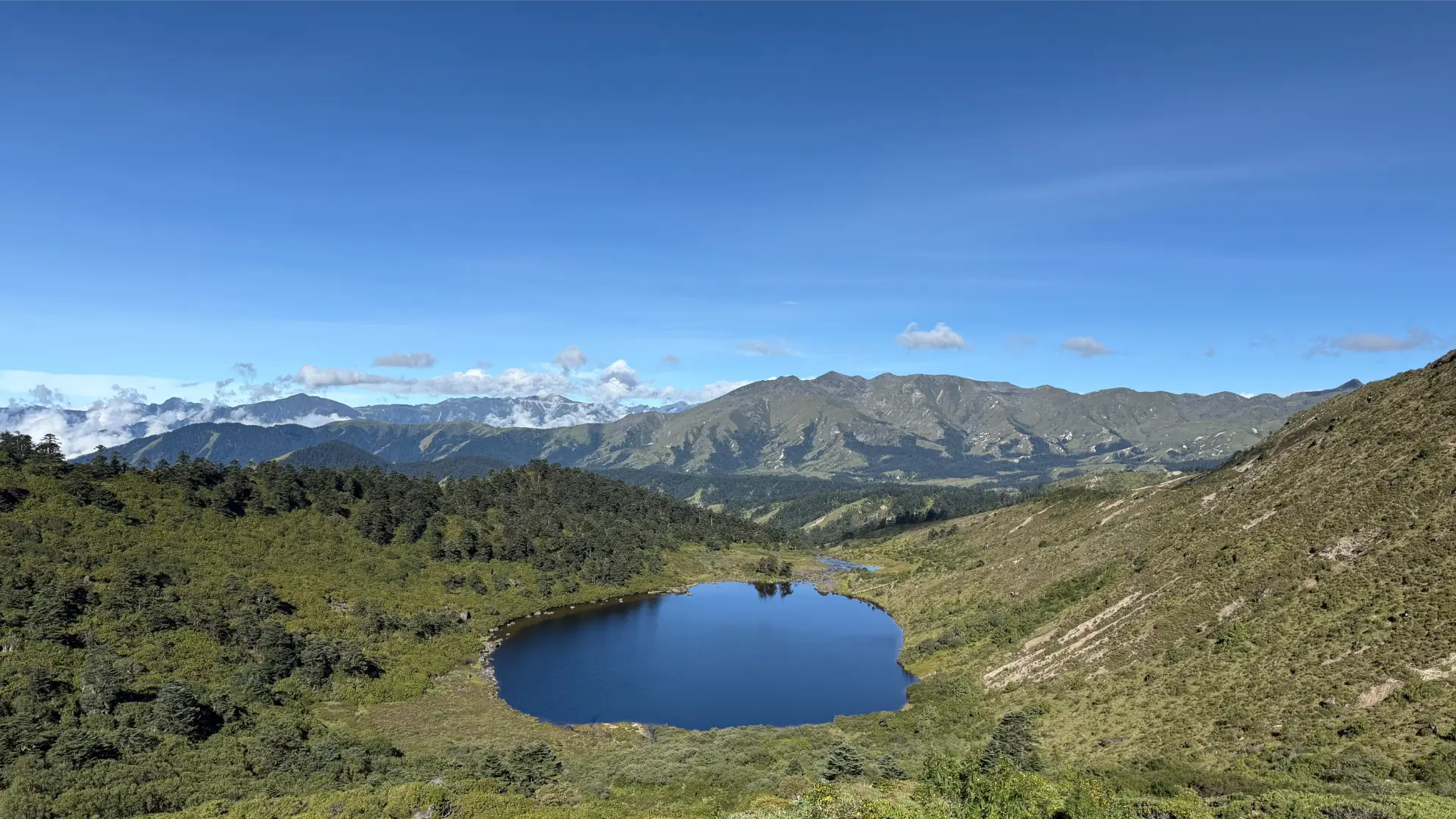
Trekkers describe the trail as a true Bhutanese wilderness experience. Dense forests of blue pine and rhododendron give way to open alpine pastures where Meconopsis poppies bloom under fluttering prayer flags. The route ascends scenic passes and skirts high lakes, each day bringing sweeping views of the Haa valley and distant Himalayan peaks. In summer months, the slopes are famously carpeted with Bhutan’s endemic “white poppy” (Meconopsis superba). These dramatic flowers – which (famously) can change from pure white to pink and red as they age – lend the trek its nickname “Poppy Trek”. Campfires at dusk are accompanied by the scent of pine and the crunch of alpine grass underfoot.
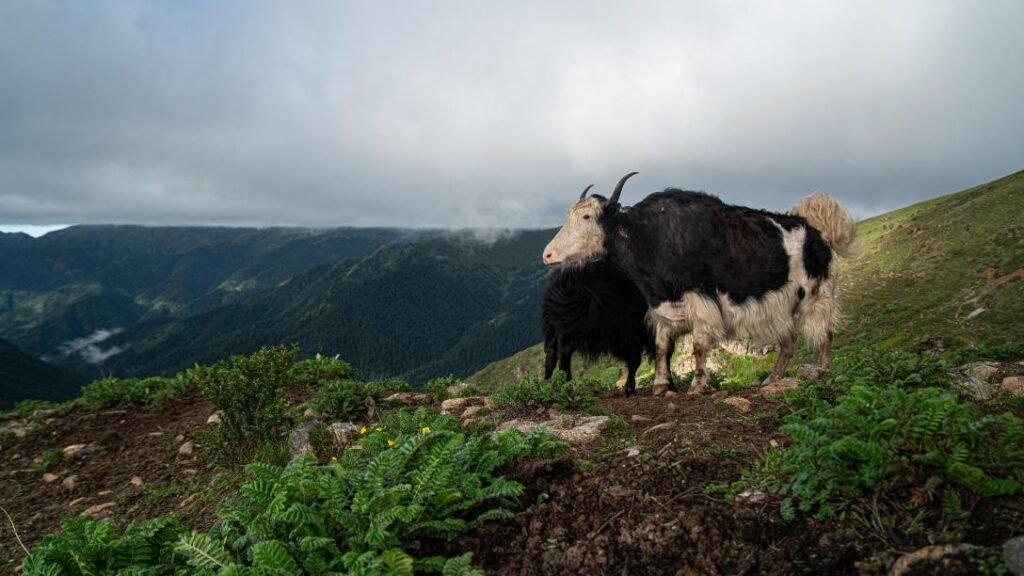
Beyond its blooms, Nubtshonapata is prized for wildlife and plants. A 2024 forest survey logged 282 plant species (70 families) along the trail – from medicinal herbs to rhododendrons – and noted the “iconic” white poppy among them. Mammal sightings or signs are plentiful: surveyors recorded 66 mammal species’ tracks. This includes high-altitude specialists like Himalayan musk deer and (in this Snow Leopard conservation area) even the elusive Snow Leopard. Birders have counted 47 species here. Common songs include Greenish Warblers, White-browed Rosefinches and Olive-backed Pipits, and the flash of a Himalayan monal pheasant has been seen on high ridges. Each camp offers its own natural spectacle: dawn chorus in the meadows, grazing yaks at sunset, or the shimmer of a blue mountain lake.
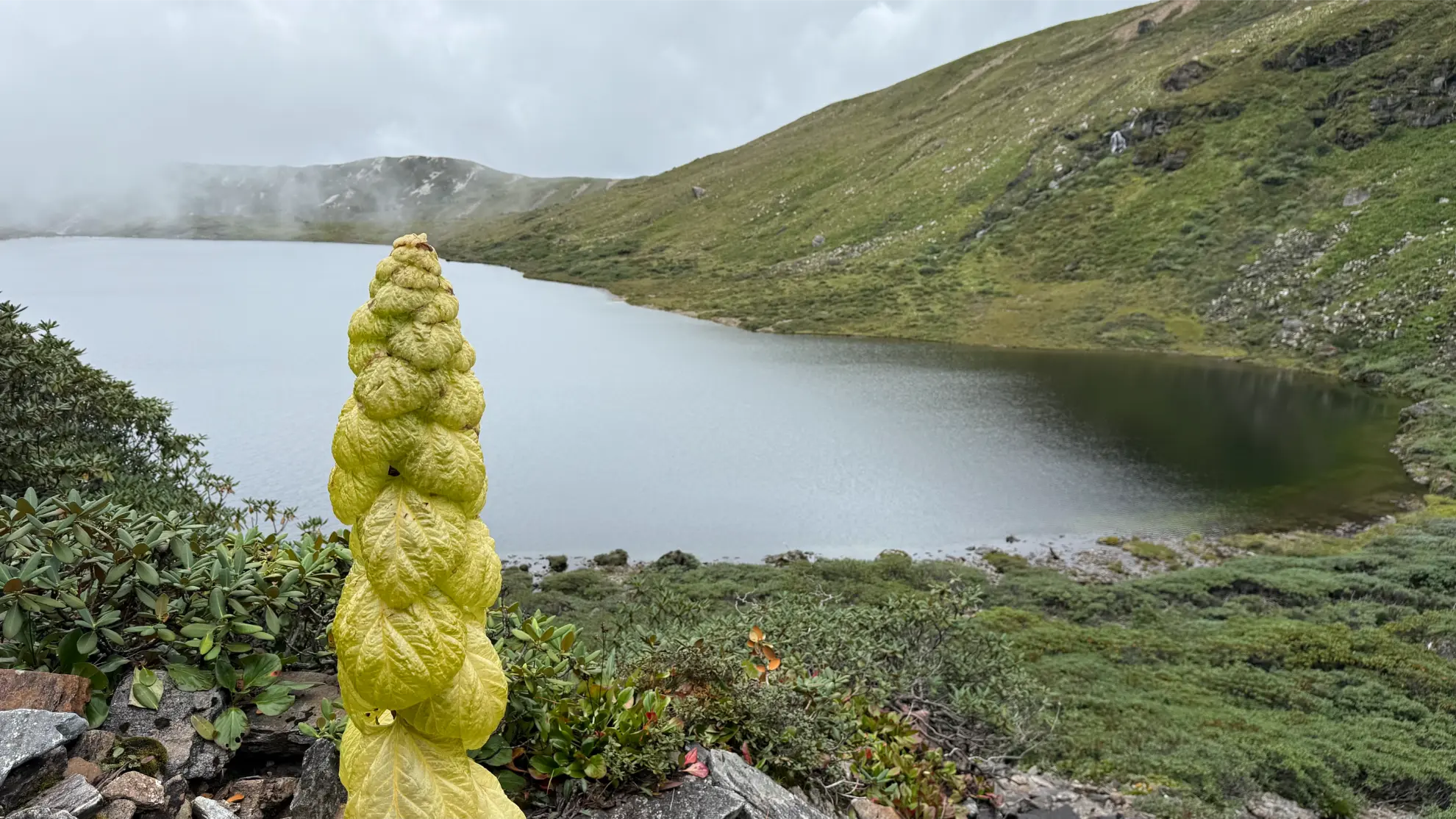
Cultural and spiritual heritage imbue the trek with extra significance. At the journey’s end lies Nubtshonapata Lake – the “Great Lake of the West” – long considered sacred by the Bhutanese. Local lore connects the trail to Terton Sherab Mebar (an 18th-century “treasure revealer” saint) and to the mythical red-horned Nublang cattle of Bhutan. Pilgrims and herders have used these high routes for centuries, and even today one might find mani stones, prayer flags, or small shrines at the passes. At Rigona Tsho (a lake on the trek), for example, tradition holds that Sherab Mebar once discovered a ritual cymbalvisit2bhutan.com. By contrast, modern trekkers can enjoy this sacred solitude with only the wind and birdsong for company. On clear nights, the Milky Way spills over the tents; at sunrise, prayer flags flutter golden in the dawn light.
In practical terms, Nubtshonapata is a moderate camping trek. Remoteness means tents each night – usually pitched on grassy high campsites by a cook crew’s kitchen – with simple “A-frame” sleeping tents and a shared toilet tentsouthcol.com. The path itself is well-established but rugged in places: expect uneven trails, rocky passes (around 4,000+ m), and river crossings. Permits and a licensed guide are required. Optimal trekking seasons are late spring (May–June) and autumn; notably, mid-June to July is when the white poppies and other alpine flowers are in full bloom (the survey noted most poppies flowering in June–July). While all skill levels can handle the distances, good fitness is recommended for the altitude and daily climbs.
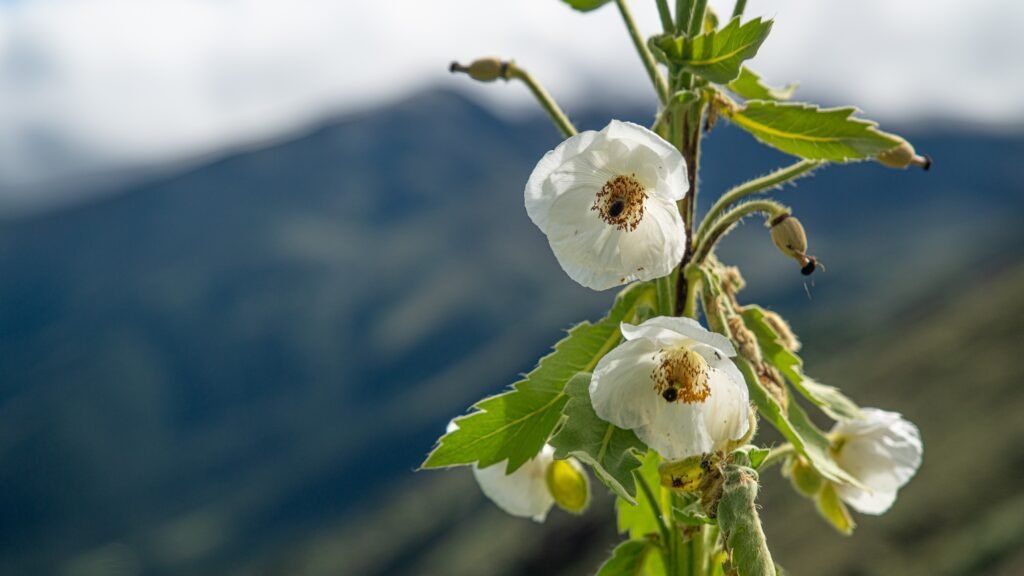
By the end of the journey, most trekkers feel they’ve walked through a Bhutanese fairy tale. Every vista reinforces why the Nubtshonapata route has been called “pristine” and “breathtaking”. With each campfire dinner beside a remote tarn, one glimpses a Bhutan where nature and culture intertwine. In sum, the Nubtshonapata Trek is more than just a hike – it’s a journey of the senses, a pilgrimage through poppies, prayer flags and pure Himalayan silence.
Sources: Official Bhutan biodiversity surveys and trekking reports provide the factual basis for this guidesouthcol.com. These include a 2024 flora-and-fauna assessment by Jigme Khesar Strict Nature Reserve officials (citing altitude, distance, species counts, etc.), and veteran trekker descriptions of the routesouthcol.comsouthcol.com.
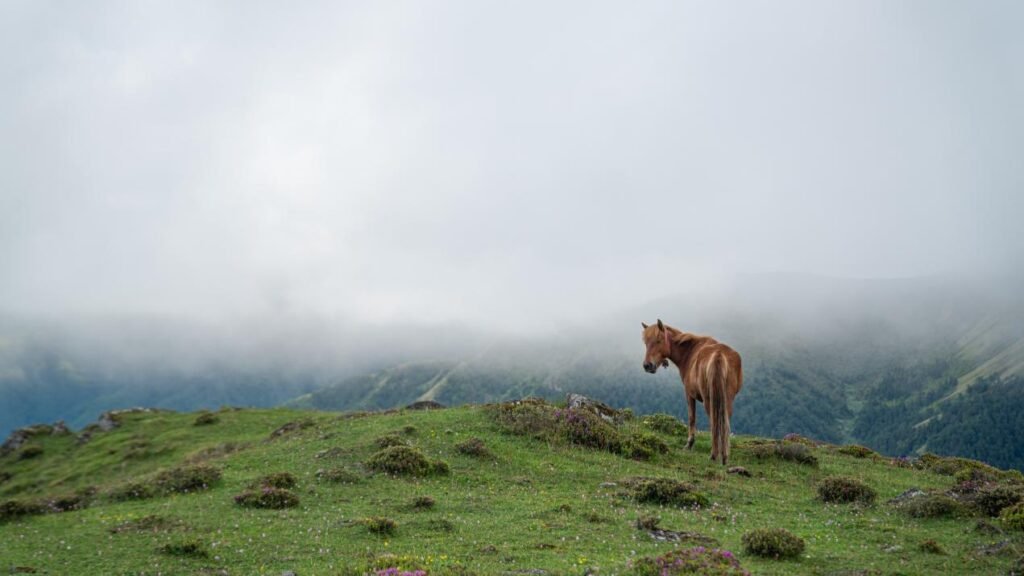
Contact JKSNR office for available porter ponies, cooks and local guides. They will connect you to available people. #17612566
Distance: 21.3 km loop (start/end at Kajena Village, Katsho Gewog))
Duration: ~5 days, 4 nights (camping throughout)
Walking: ~6–7 hours per day on moderate terrain
Altitude: ~3,278 m (trailhead) up to ~4,200 m (high camps and passes).