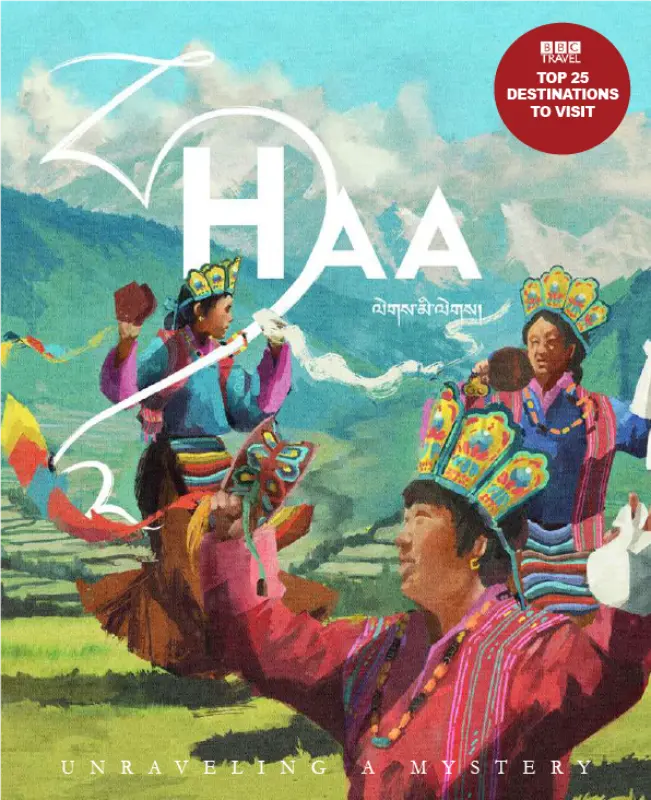
The legacy of Ap Chhundu, the revered protector deity of the Haa Valley, is one of the most sacred and enduring elements of Haa’s spiritual and cultural identity. Deeply rooted in oral tradition, ritual practice, and communal memory, the story of Ap Chhundu is not merely a legend of the past—it is a living belief that continues to guide, protect, and unite the people of Haa.
Origins of Ap Chhundu
According to elders and oral accounts, Ap Chundu was born in Dorjidehn, identified today as Bodhgaya in India, one of the holiest sites in the Buddhist world. He later received his education in Tibet, but his true spiritual home came to be Lhakhang Karpo (the White Temple) in present-day Haa.
During the 8th Century when Guru Padmasambhava was performing a ceremony in the cave of Gyon-Yul-Pal, Ap Chundu among other local deities stirred up many disasters and obstacles to obstruct the Guru’s activities. In response, the Guru brandished his golden vajra upon which all the evil spirits became unconscious. When Aup Chundu woke up, he had turned into a small turquoise coloured boy and prostrated to the Guru, pledging his allegiance to the protection of the Buddha Dharma.
Ap Chhundu and the Fire
One of the most important episodes in Ap Chhundu’s legend takes place during the time of Zhabdrung Ngawang Namgyal, Bhutan’s unifier. Elders recount that when Zhabdrung arrived in Bhutan, Haa had not yet fully received Buddhist teachings, and life in the valley was still guided largely by indigenous beliefs.
At this time, the people of Haa faced a strange hardship: they could not start a fire. Fire was said to exist only at a place called Nub Tsuen Bi Yeekha, and someone was needed to retrieve it. Ap Chundu volunteered.
On his return journey, Ap Chhundu was welcomed by local shamans and shamanesses, who offered him refreshments. While he rested, Ap Gyengay quietly stole the fire and carried it to Punakha Dzong, where he presented it to Zhabdrung, claiming credit for the deed.
When Ap Chhundu arrived at Punakha and told his version of events, Ap Gyengay denied the accusation. Enraged, Ap Chundu slapped him so forcefully that Ap Gyengay was rendered deaf in one ear.
Recognizing Ap Chundu’s power and presence, Zhabdrung declared him the protector deity of all people living under homes bearing white flags. It is said that as soon as Ap Chundu departed Punakha, Zhabdrung realized that Ap Chundu would command devotion rivaling his own. While golden domes (sertog) are reserved for dzongs and lhakhangs (representing Zhabdrung), white flags appear atop households throughout Bhutan—a sign of Ap Chundu’s protection that endures to this day.
Protector in Times of War
Ap Chundu’s role as guardian of Haa is most vividly remembered through accounts of a Tibetan invasion. Oral traditions recount that Ap Chundu personally defended the valley, displaying superhuman strength and speed. It is said that while four Tibetan soldiers were needed to operate a single missile, Ap Chundu could wield one alone. Legends further describe how he wore nine iron shoes in a single day, walking across mountains to protect the valley and assist the Haaps in repelling the invaders.
One of the most powerful stories tells how Ap Chundu used a magical spell to deceive the invading army at Jangkha-kha. The Tibetan soldiers saw what appeared to be a flat plain, but in reality it was a steep cliff. They advanced, fell, and the valley was saved.
Chhundu Lhaseol
This victory is commemorated annually during Chundu Lhaseol, held in the 11th month of the Bhutanese calendar. At Jangkha-kha, the ceremonial site where Ap Chundu’s might is thought to have stopped the invasion, pows and poms (shamans and shamanesses) congregate during this celebration.
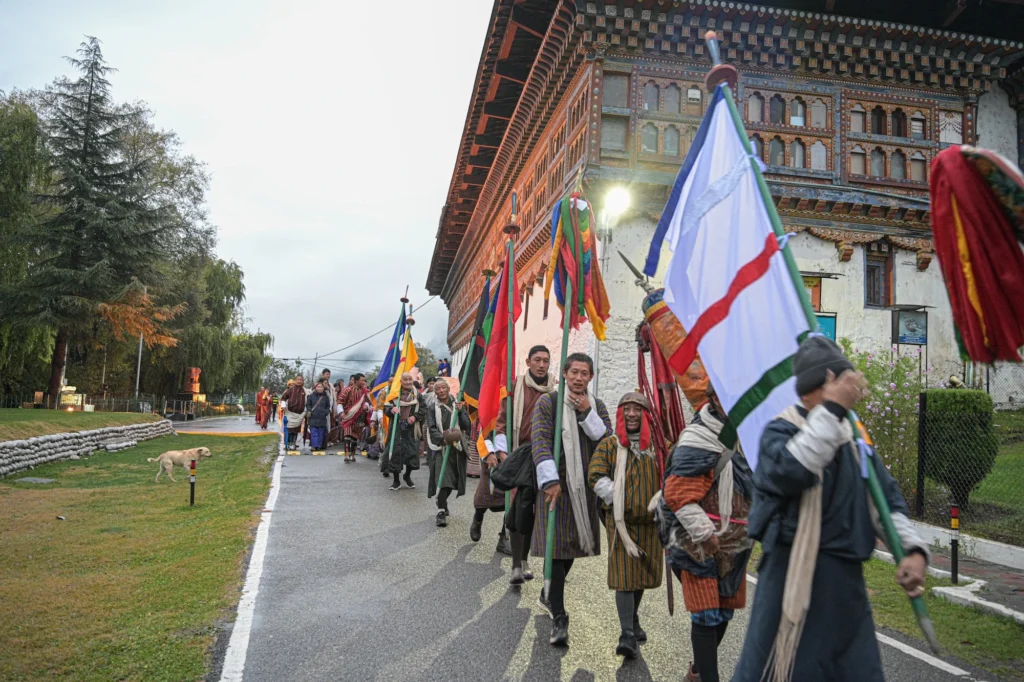
The festival’s Chhipdrel (procession), which is thought to be the longest in Bhutan, is one of its distinguishing characteristics. Starting at Lhakhang Karpo, the procession travels about ten kilometers across the valley to reach Jangkha-kha.
The Sacred Horse of Ap Chundu
The horse that leads the procession is believed to carry the presence of Ap Chhundu. In earlier times, people believed that during the Chhipdrel, Ap Chhundu invisibly mounted the horse. At certain locations – especially near the Nga-chhu stone bridge – the horse would appear unusually tired or behave differently, reinforcing the belief that the deity was riding alongside the people. To this day, the horse remains a sacred symbol of Ap Chhundu’s watchfulness and protection.
The legend of Ap Chundu continues to live on in the prayers, flags, rituals, and oral traditions of the Haa Valley. More than a deity of the past, Ap Chundu is seen as an ever-present guardian – one who walks the mountains, watches over homes marked by white flags, and protects the valley in both visible and unseen ways.
In Haa, Ap Chundu is not just remembered – he is lived, invoked, and trusted, generation after generation.