Haa Bypass road – Appx 97 km/ 2 hrs (From Thimphu)
Via Dobji Dzong– Appx 109 km/ 3+ hrs (From Thimphu)
Chele La from Paro (Thimphu-Paro Highway) – Appx 108 km/ 3+ hrs (From Thimphu)
Reaching Haa is a part of the journey that makes visiting this quiet western valley so special. Away from the main tourist areas, Haa can be accessed through three road drive options, each offering a different experience of landscapes.
The most commonly used route is via the Haa bypass road, which branches off from Chapcha, Chukha. This junction winds down from the main highway and a clearly visible overhead signboard will guide you through the right road. This route takes 3+ hrs to reach Haa and is the most direct way to reach Haa, making it a practical choice for travelers . Initially the roads are narrow, however as you travel through the gorge, the valley opens up and the roads are smoother from here on. The road passes through forested slopes and open valleys, gradually leading into Haa town. Visitors are advised to check road conditions before embarking on these roads especially during summer months when heavy rainfall and loose red soil causes frequent landslides.
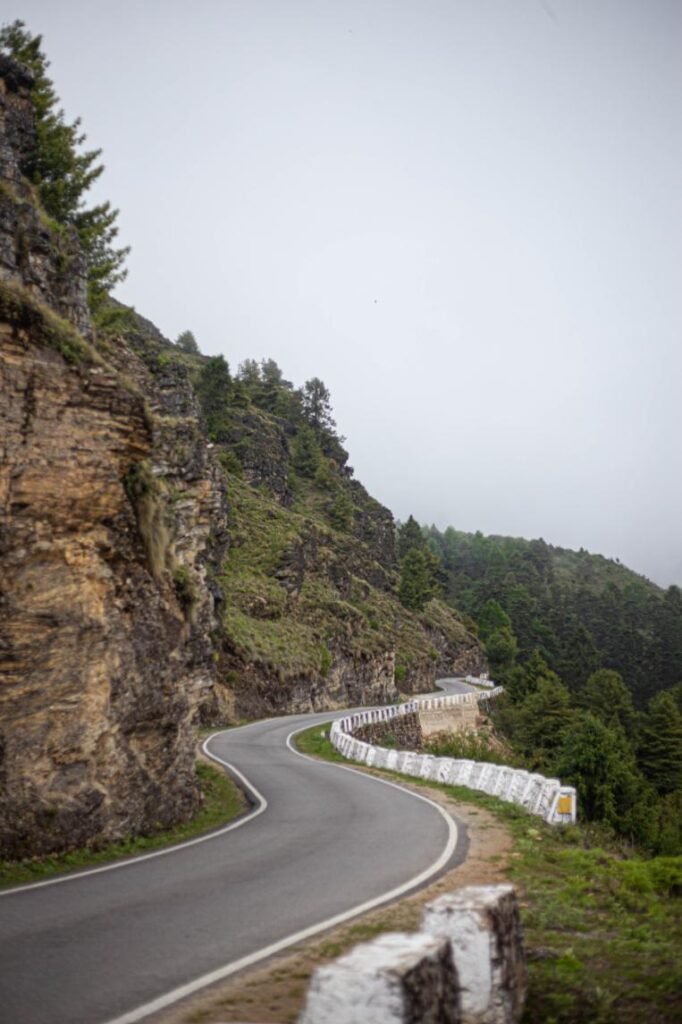
Another route to Haa is via Dobji Dzong. This road is less frequently used and tends to be more rugged, but it appeals to travelers who enjoy quieter drives and exploring lesser-known areas. This route diverges from Chuzom and if you are travelling from Thimphu, take the left road after crossing the Chuzom bridge. Road conditions here can vary, so it is best suited for those with time and flexibility.
The third route is via Chele La from Paro. If you have just landed in Paro via a flight, you can take this road drive directly from Paro. It takes 3+ hrs to reach Haa and passes through one of the most scenic mountain passes in Bhutan, Chele La. On clear days, travelers can get sweeping views of the Himalayan range, including the majestic peaks of Mount Jomolhari and Jichu Drake. The summit is 3988 m above sea level. The drive from Paro to Haa is winding and meandering, so passengers should be mindful that the constant curves may cause motion sickness and extra caution is needed during winter when snow and ice can make the road slippery.
One of the distinctive aspects of travelling to Haa is the flexibility of its road access, allowing visitors to enter the valley through one route and exit through another, creating a natural circuit rather than a return journey on the same road. This makes travel to Haa especially rewarding, as each approach and departure offers contrasting landscapes and experiences—from forested gorges and open valleys to high mountain passes. Travellers may, for example, enter via the Haa bypass road from Chukha and exit through Chele La toward Paro, or vice versa. This variety enhances the journey itself, offering changing scenery and perspectives.
The best time to visit Haa is during spring (March to May) and autumn (September to November). Spring brings blooming landscapes, while autumn offers clear skies and stable weather, perfect for road travel and sightseeing. During the monsoon and winter season, road conditions can be unpredictable.