Have you ever heard of a Tshechu festival in a forest?
Hidden deep in the forests of southern Haa, Rangtse Tshechu feels like a secret gently revealed to those willing to journey off the familiar path. Unlike most tshechus in Bhutan – celebrated within the stone courtyards of monasteries and dzongs – Rangtse Tshechu unfolds in the heart of nature itself. Set beside dry riverbeds and surrounded by towering trees, the forest becomes both sanctuary and stage.
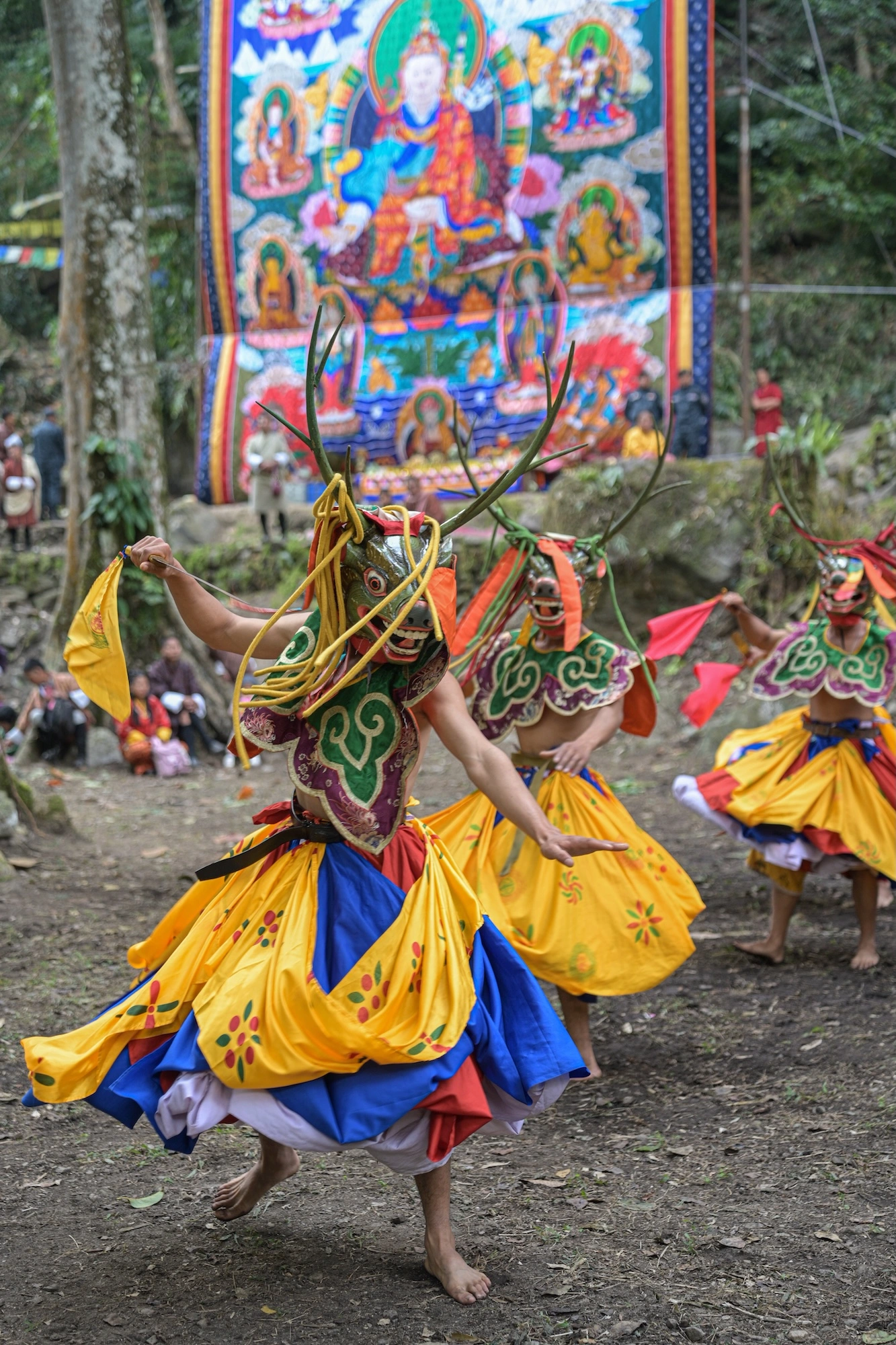
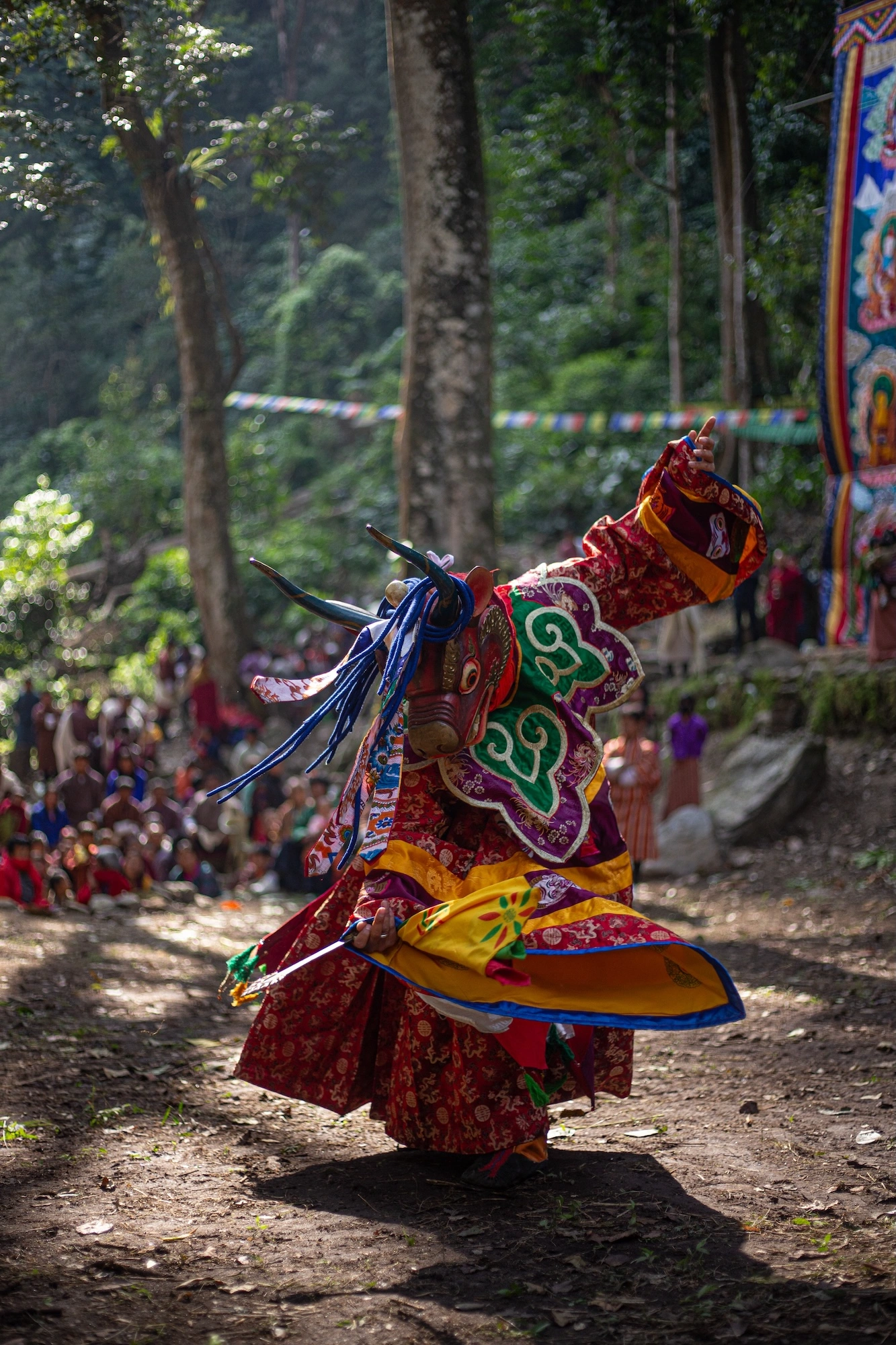
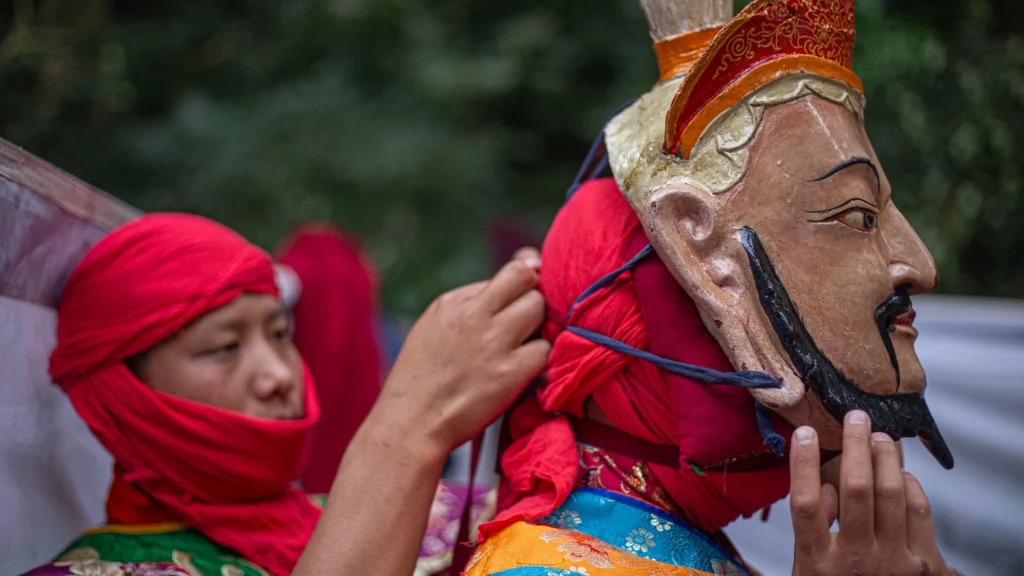
As dawn breaks, soft rays of sunlight filter through the tall pines, illuminating masked dancers who emerge as if from the forest itself. The rhythmic beats of drums echo through the woods, blending seamlessly with birdsong and the rustle of leaves. In this setting, the dances feel ancient and elemental – performed not just for spectators, but for the land, the spirits, and the unseen guardians of the place.
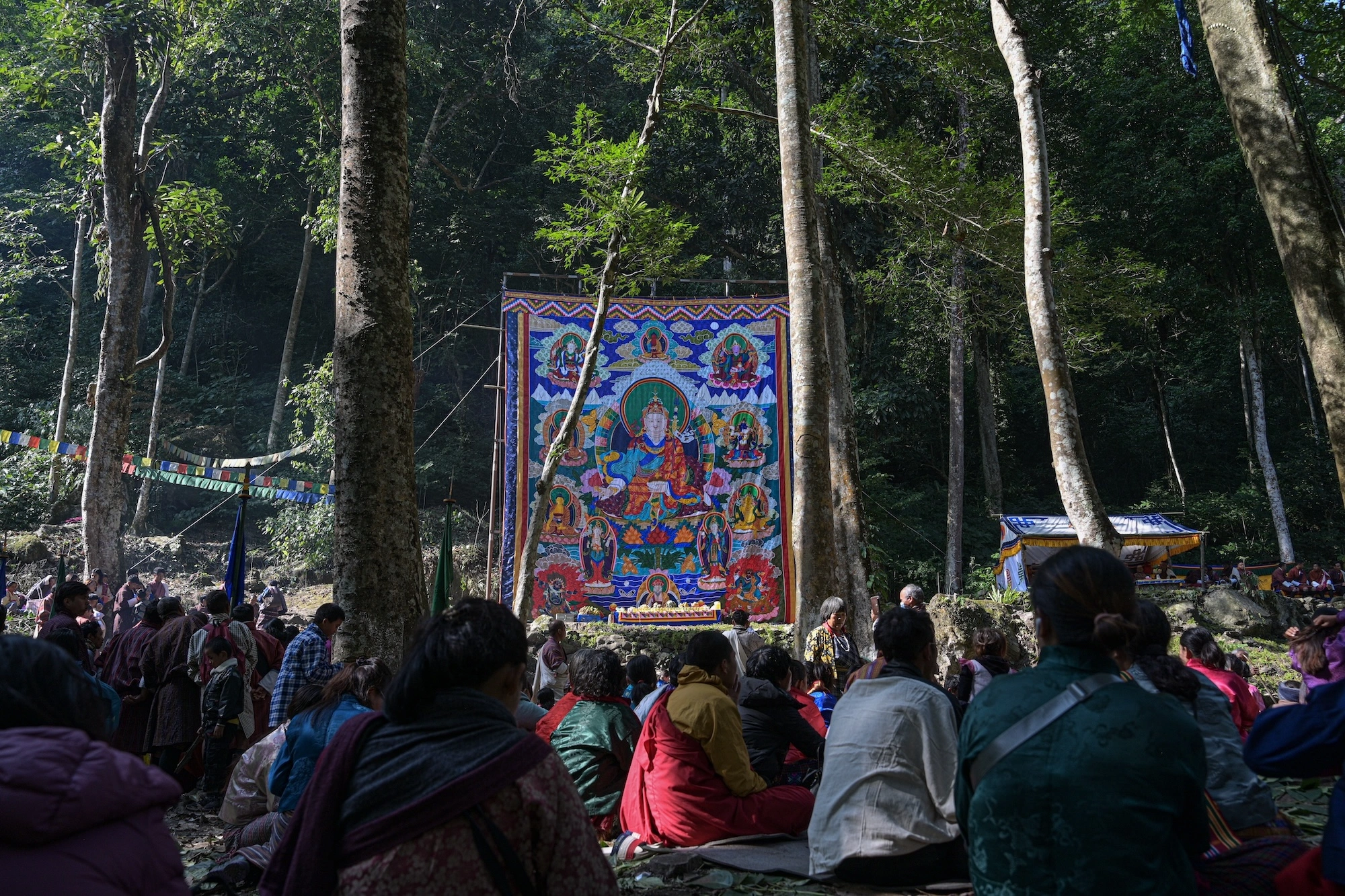
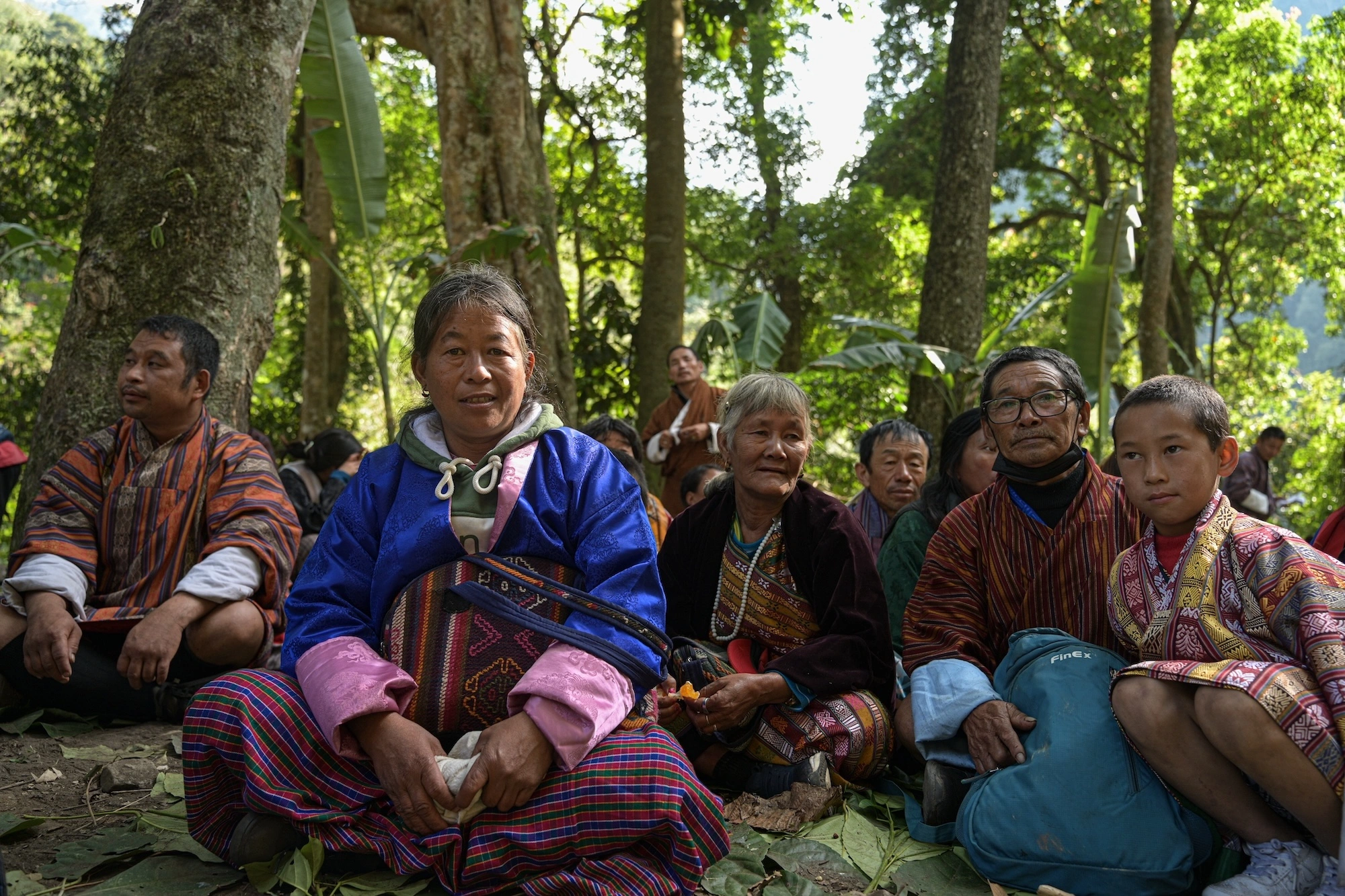
Here, the forest breathes with the festival. Prayer flags flutter gently among branches, devotees sit on the earth itself, and tradition feels inseparable from the land. Rangtse Tshechu is not merely witnessed; it is experienced – an ethereal convergence of culture, devotion, and nature, where Bhutan’s spiritual heritage reveals itself in its most raw and magical form.
Introduction
Inaugurated by His Majesty The King on 23 December 2017, following the 110th National Day celebrations in Haa, the Rangtse Nye Tshechu has since grown into a profound spiritual occasion. The event is conducted jointly by the Dzongkhag Administration and the Gewogs of Sangbaykha and Gakiling. Since 2023, local mask dancers and performers have been from the two Gewogs. The annual Rangtse Nye Tshechu is held coinciding with the 10th day of the 10th Bhutanese month, as it has unfailingly been observed every year. Hundreds of devotees gathered to offer prayers and receive blessings at this sacred site. One of the key highlights of the festival is also the blessings from the Guru Thongdrel.
Getting There
If you’re starting from Haa town, it takes a 3 hour drive ascending to Tergola and a speedy descent to southern Haa to reach this destination. The farm roads are bumpy and dilapidated due to the recent flash floods. The altitude is much lower here (around 800 m) and the air is warmer. You can choose to either stay at the Sangbaykha Eco Camp, a brand new ecotourism initiative by locals here or at local guest houses at Sangbaykha Dungkhag. The festival ground is another 20 minute drive along precarious cliffs that takes you to the starting point of the mild hike to the ground. The mild 30 minute hike takes you along the Nyachhu (stream) dry river beds during this time of the year. Locals say it’s difficult to visit Rongtse Ney during the summers because of the swollen streams. The walk is enjoyable crossing the boulders on the dry river beds and slowly the sound of people at the ground fill the forest.
The Tshechu in the Forest
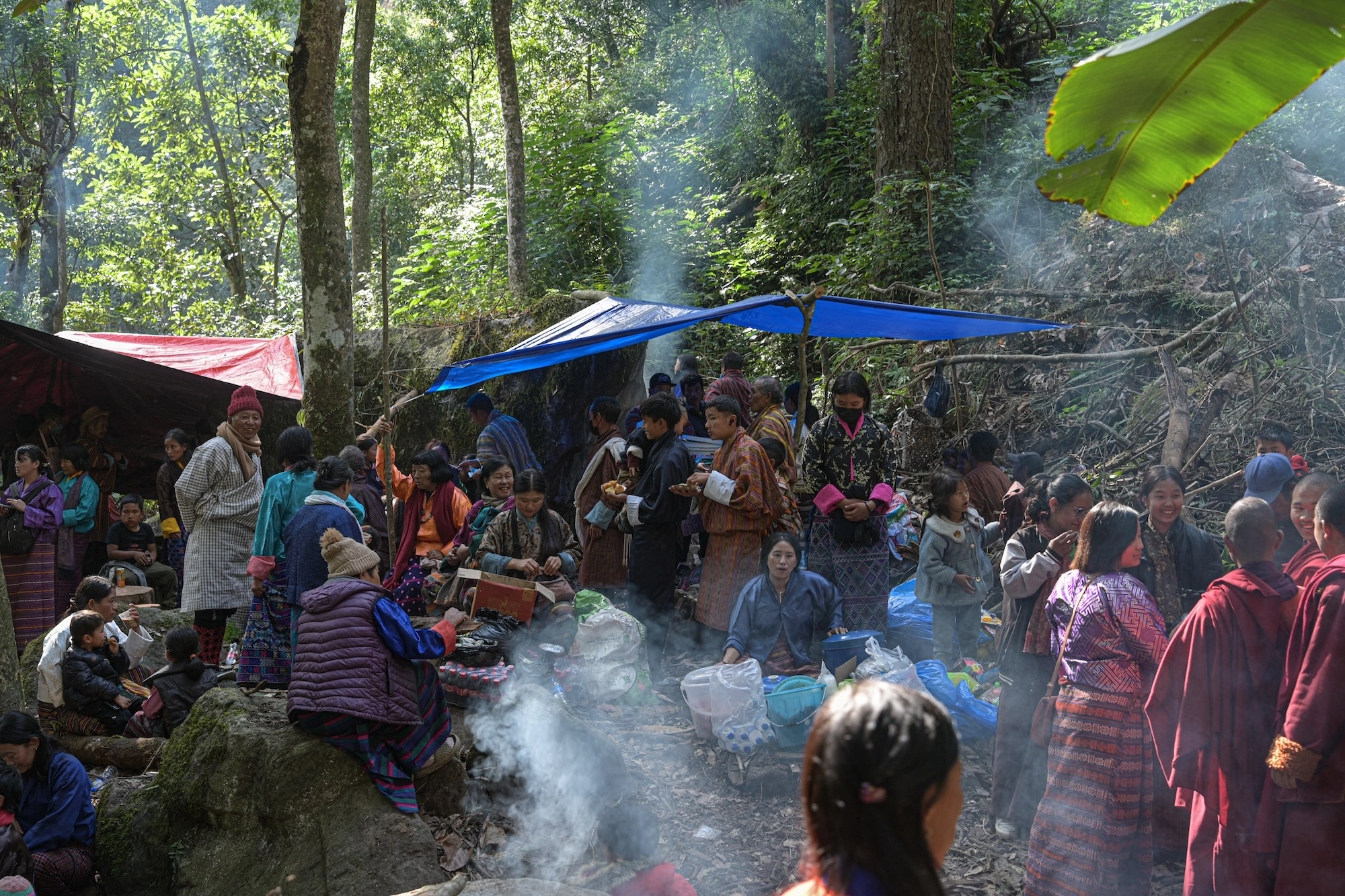
Arriving at Rangtse Ney Tshechu feels like stepping into a living tapestry of faith, culture, and nature. Set deep within the forests of southern Haa, the festival unfolds in a clearing beside dry riverbeds, where towering trees stand as silent witnesses to centuries of devotion. As dawn breaks, villagers and pilgrims gather on the forest floor, wrapped in their finest kira and gho, sharing food, laughter, and stories before the sacred performances begin.
Throughout the day, visitors witness a rich sequence of masked dances and cultural performances, each carrying layers of spiritual meaning and local tradition. The rhythmic beat of drums, the swirl of brocade costumes, and the echo of cymbals blend seamlessly with birdsong and rustling leaves, creating an atmosphere that feels both intimate and transcendent.
The heart of the festival, however, is the awe-inspiring Guru Rinpoche Thongdrel. Hung amidst the forest, facing the festival ground, this gigantic sacred image draws devotees into quiet reverence. Receiving blessings beneath it, framed by sunlight filtering through the trees, is an experience both humbling and unforgettable.
Rangtse Ney Tshechu is also a powerful social gathering, bringing together communities from across Haa and showcasing the region’s remarkable cultural diversity. Beyond the festival, visitors often make a pilgrimage to the nearby Rangtse Ney cave, believed to be the meditation site of Guru Rinpoche and Khandro Yeshey Tshogyal. Walking through these forests, one realizes that Rangtse is not just a destination—it is a journey into Bhutan’s living spiritual landscape. The meditation cave of Guru Rinpochhe has seven doorways – each with unique rock formations with sacred significance. The deeper you go into the cave, the narrower and more rugged the cave becomes. If you’re visiting Rangtse ney for the first time, take a local guide with you as the narrow passageways can be quite confusing for first-timers. The seeping waters have also made the ground slippery and the jagged rock protrusions can be dangerous especially without proper torches. Rangtse Ney is a sacred site that holds great historical and religious significance. It is believed to be the secret abode of Guru Rinpoche and Khandro Yeshey Tshogyel, who meditated at the site and left their imprints on the rocks inside the cave.
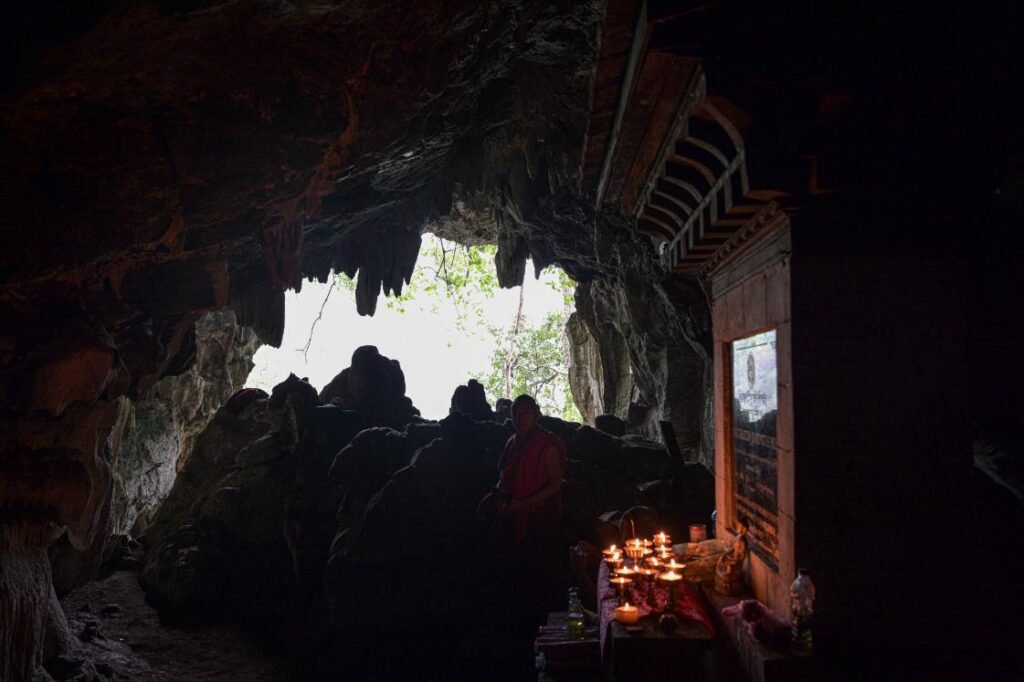
In Lodruk Chojung, written by the late 69th Je Khenpo Geshe Geden Rinchen, it is stated that a sacred place of Guru Rinpoche called “Rinchen Shong” in southern Haa is Rangtse Ney. The name Rangtse Ney is derived from the prophecy of Guru Rinpoche. The sacred site is also known as Sangbay Ney, which translates as ‘the site which is concealed’, and sometimes, it is also called Mochu Ney as it is located near the river, Amo Chu.
There is something deeply ethereal about Rangtse Tshechu. The forest becomes a living temple, the earth its courtyard, and the sky its ceiling. Here, tradition breathes in harmony with nature, offering a rare and magical glimpse into Bhutan’s spiritual heart, where culture and wilderness exist as one.
USEFUL INFORMATION
Soembaykha Guest House Contact # 17952845
Rangtse Ecolodge Contact # 1794850
Rongtse Ney Koenyer Contact # 17963491
Gewog – Gakiling