Have you seen puffed-up pig skin hanging along the village roofs in Haa? Turns out, these old crafts are much more than just household embellishments.
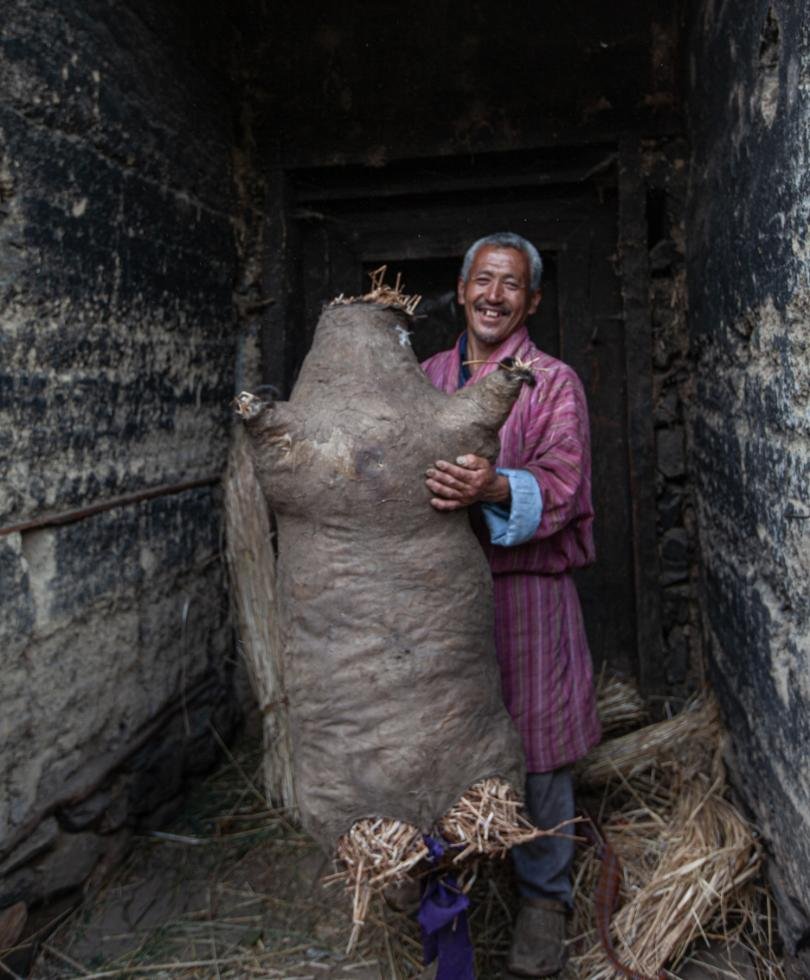
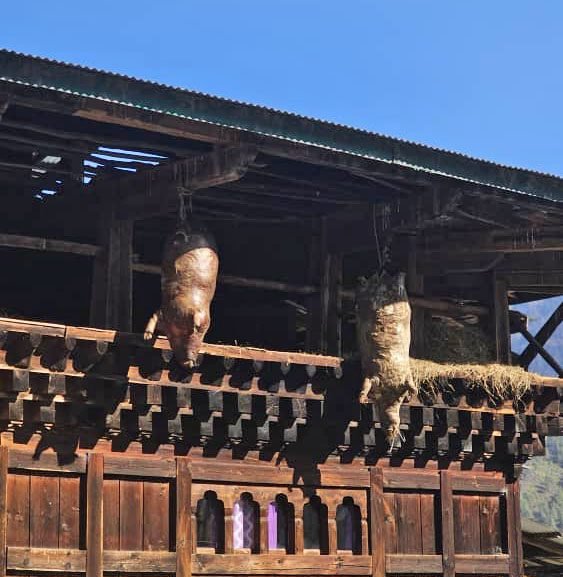
If you have never noticed this peculiar way of milk churning then you are in for a surprise. This unique equipment is called ‘oche.’ Made of pigskin or yak calf skin, oche is the usual choice to churn the milk to make butter and cheese in the highlands. Compared to traditional cylindrical milk churners made of wood, oche is lightweight and easy to carry especially for highlanders when they change camps. The oche can be folded like a bag and most importantly, this portable milk churner has more capacity than the traditional one.
The process of making oche begins after a pig or yak calf carcass is obtained, then the skin is removed as carefully as possible so it remains whole and undamaged. Special attention is given to keeping the skin intact, as the strength and durability of the oche depend on this. Once removed, the skin is thoroughly cleaned to remove any remaining flesh, fat, and impurities. After cleaning, all openings in the skin are tightly stitched or tied closed using strong thread or sinew. Only one small opening is intentionally left, which will later serve as the mouth of the oche. Then it is left to dry.
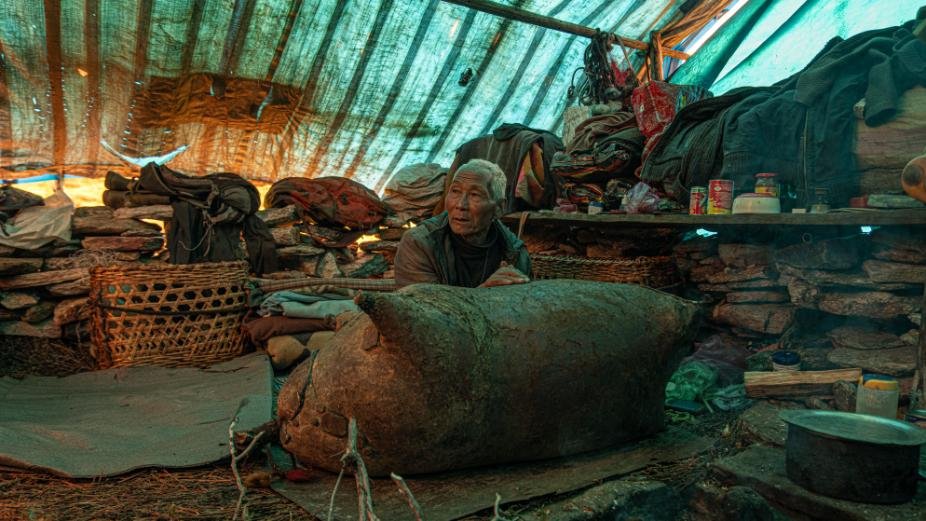
Once it is ready, pour the yak milk and inflate the skin before sealing the mouth. When the skin resembles a bolster shape. Then rock the equipment to and fro until butter is formed. As you rock it, you will hear the sloshing sounds of milk churning inside.
Over time, the oche develops a smooth inner surface. With proper cleaning and drying after each use, a single oche can last for many years, making it not just a tool, but a valued household item closely tied to traditional dairy practices and daily life.