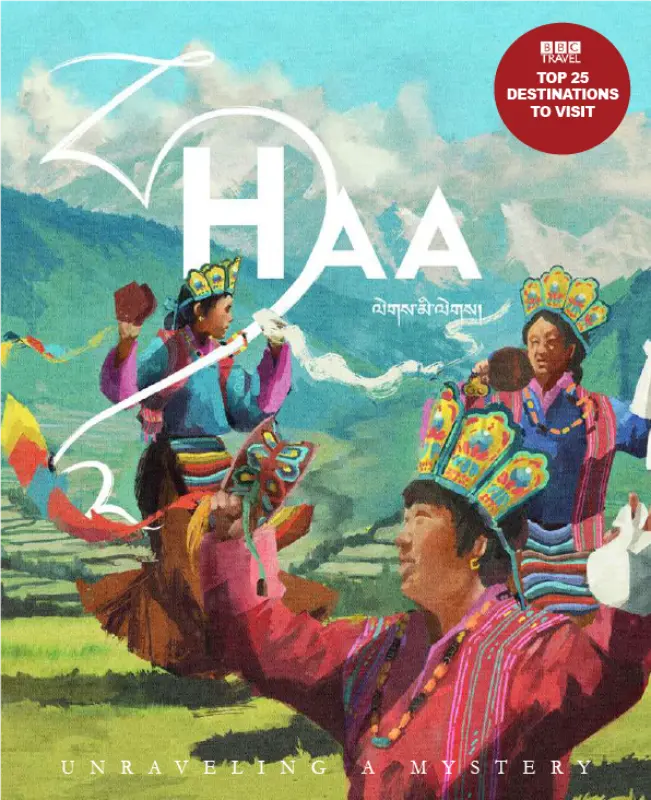
Haa is one of Bhutan’s smallest and most remote dzongkhags, nestled in a high-altitude valley in the far west of the country. Until the early 2000s it was largely closed off to tourism and outside influence, allowing unique local food traditions to endure.
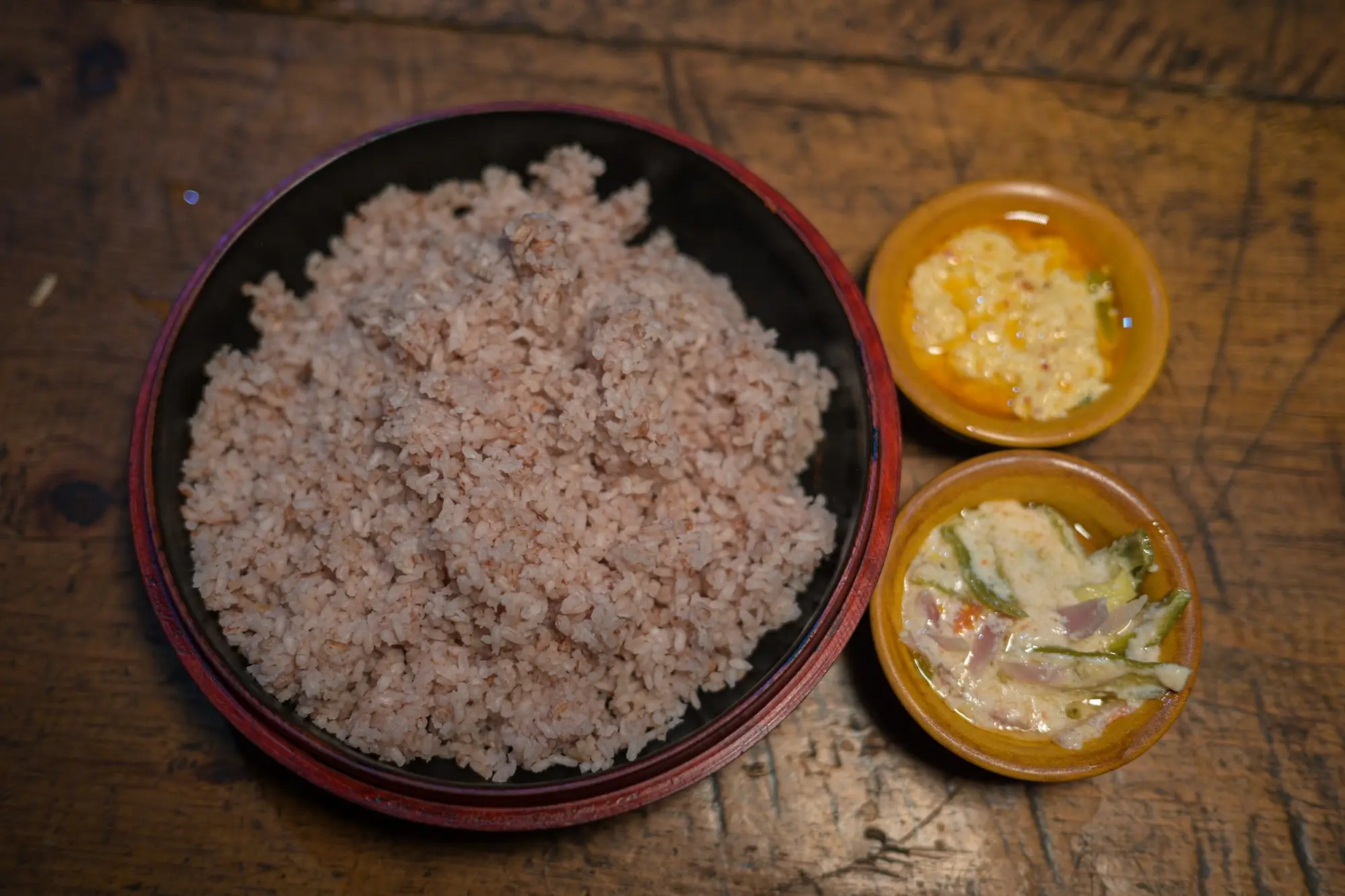
Haa cuisine is defined by hardy grains, dairy, and high-altitude crops. Buckwheat is especially central – historically, Haa was too cold for rice, so buckwheat and barley (and to some extent wheat) were staple grains.
Working with the land, and the abundance of Yaks that were integral to daily life, dishes unlike anywhere else in Bhutan emerged from the historical routes of Haap cuisine. If you’re interested to explore the cuisines in Haa, you can experience the many homestays that Haa has to offer. Besides that, you can also visit the annual Haa Spring Festival to enjoy the flavours of Haa at the many food stalls at the event. But on this journey, we are here to find out more about a unique cheese dish that you had perhaps never tasted or witnessed how it’s made. Come and try Phillu.
Phillu is a type of cheese that you rarely find in other parts of the country.
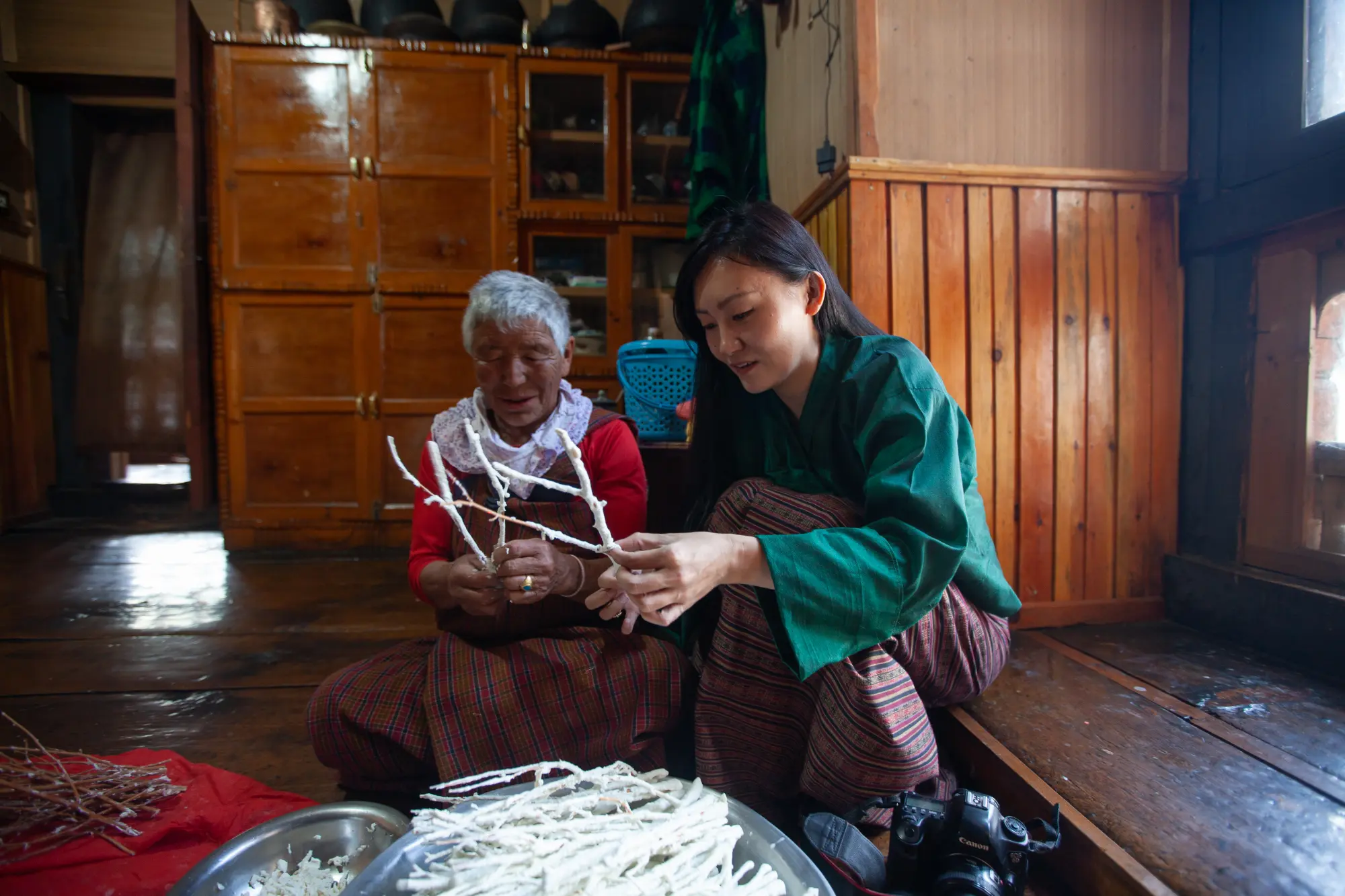
Considered to be a specialty of the highlanders in Western Bhutan, Phillu is made by placing wreaths of birch tree branches over the rim of the milking pail before milking the bji, or female yak. After the milk is emptied into the churn, the pail is turned upside down with the wreath still covering the brim to let the remnants of milk in the pail drip onto the needles. This procedure is repeated over a couple of weeks until long gummy strands are formed on the wreath. The cheese is removed, boiled, and hung until dried out. The taste is unlike any other.


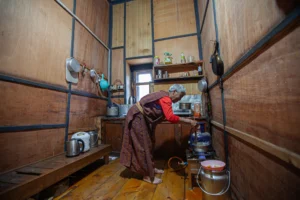
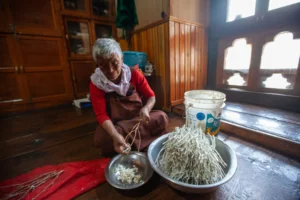
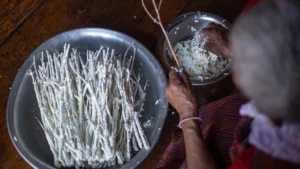
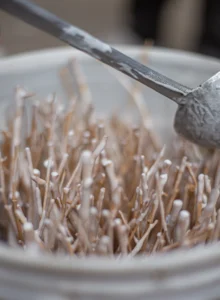
We were lucky enough to be invited to a homestay in Yangthang village to witness in person how Philu is made. Aum Sangay first layers a thick coat of yoghurt on the twigs inside the bucket. She makes sure each twig is covered by the yoghurt.
After the layering, the bucket is kept covered in a dark place for two days. After that begins the pouring of milk and layering the thick coated twigs with milk that is repeated for several times.
With time, aum Sangay shared that now a lot of people in Haa have replaced the orginal wooden pail with plastic buckets to make the cheese.
After a week, the results were marvelous. Like the landscape that encompasses them, Haaps are steady, steadfast, and unwavering people against the elements. Tradition lives on through each dish and the person who prepares it with love and lore. This is the essence of western Bhutan, where each bite echoes the silence of the mountains and the whispers of legends.