In the village of Eusu on the way to Haa town, a small family has been making and selling the Caciocavello cheese for years but not many know about it.
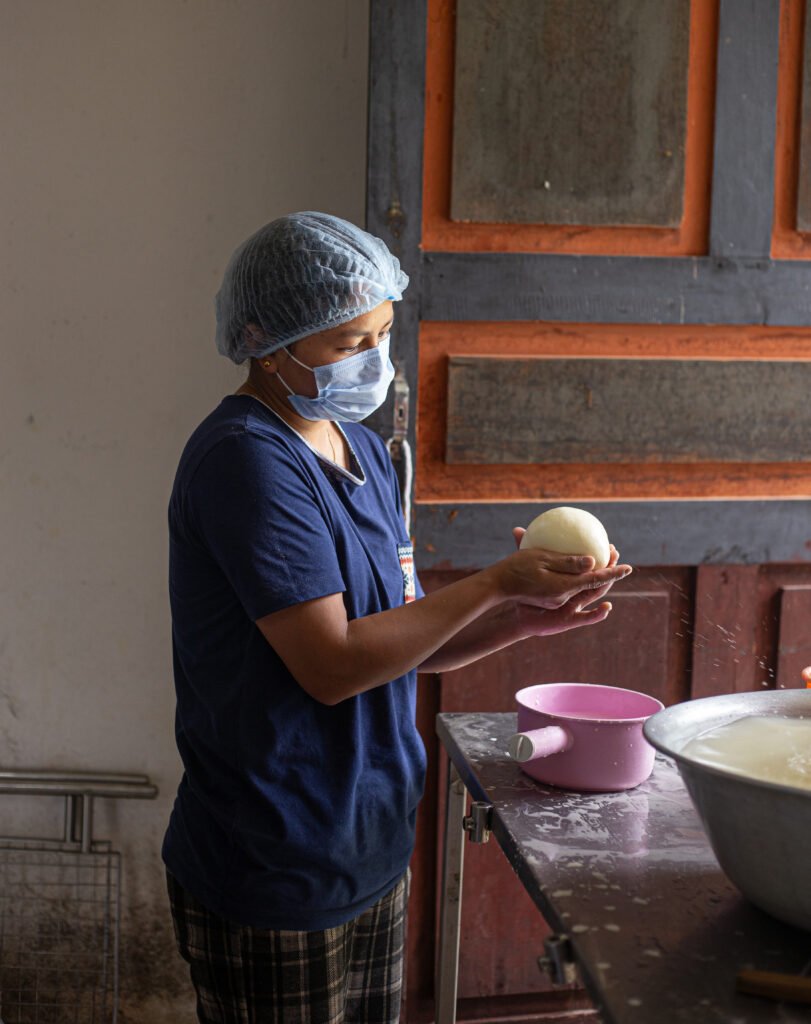
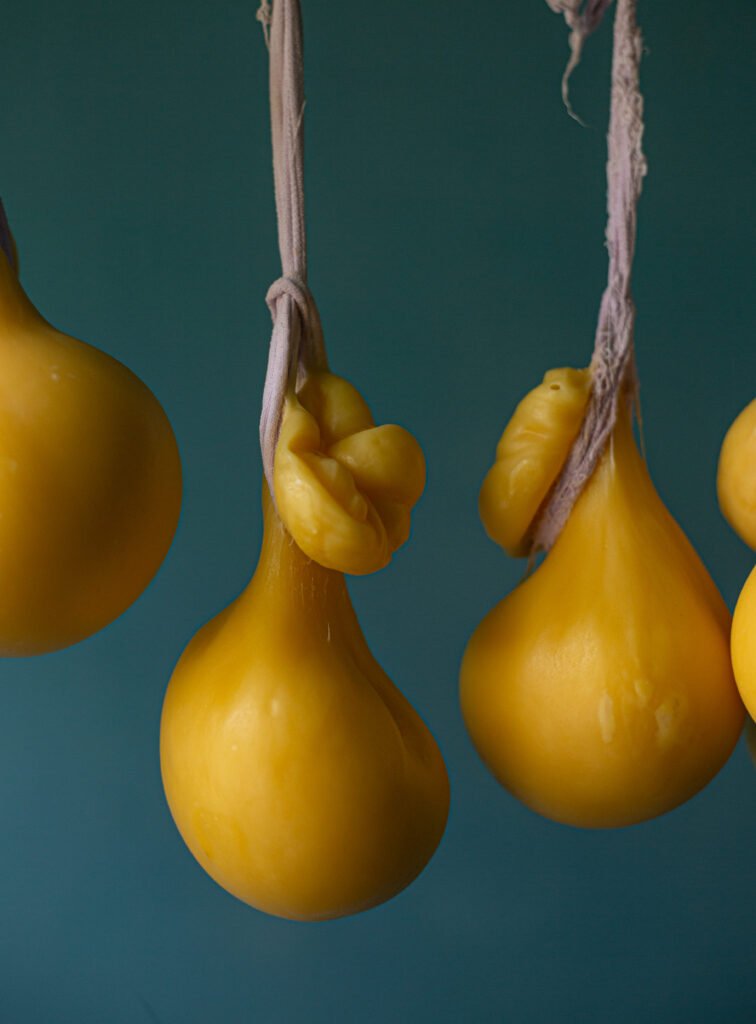
Haa Valley has a long-standing tradition of dairy production, with generations of farmers relying on products such as butter, chugo, and philu for their livelihoods. Building on this heritage, a unique initiative in the valley has introduced Caciocavello, an Italian-style cheese that is now creating employment opportunities for local youth while strengthening Haa’s dairy economy.
The initiative is carried out by members of Nyumrub Tshogdu, formed in response to rising youth unemployment in the area. To further support this effort, the Haa Eusu Meri Phuensum Dairy Collection Group was officially established in 2024 under the guidance of Dasho Dzongda. However, production of Caciocavello cheese began earlier in 2019 after professional cheese makers from Italy provided hands-on training to local producers. The training was arranged following the invitation of Her Majesty Azhi Kezang and introduced authentic Italian cheese-making techniques to Haa.
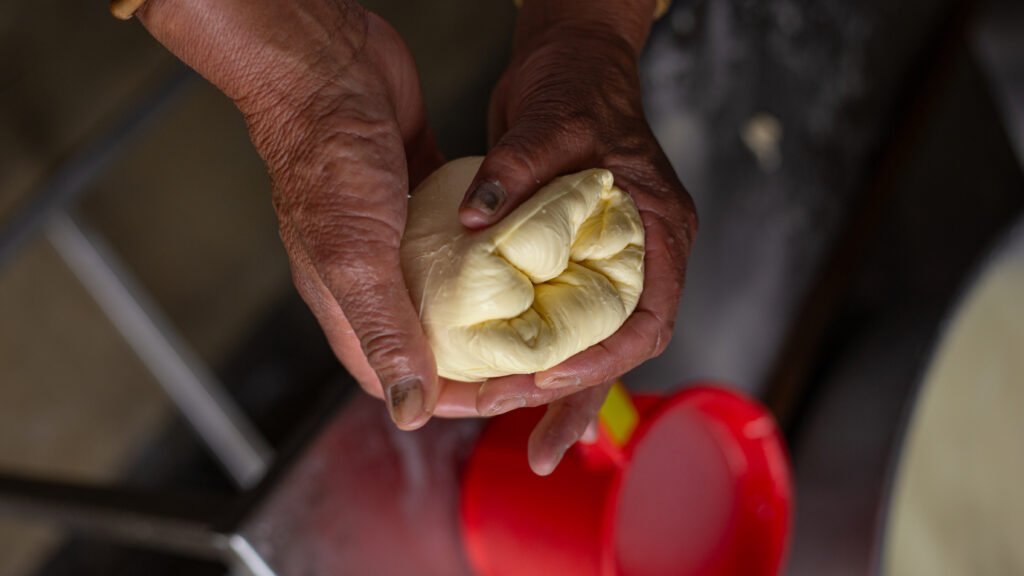
“We make the cheese the same way it is done in Italy, and we have been producing it continuously since 2019,” says Tshewang Norbu from Eusu Gewog, Dumcho Village. The initiative aligns with royal guidance to add value to traditional dairy practices and strengthen rural livelihoods.
Caciocavello cheese stands out from more commonly known cheeses such as mozzarella or gouda. Unlike cheeses that are often limited to specific culinary uses, Caciocavello is highly adaptable. It can be used in both international and Bhutanese dishes, paired with wine or tea, served on charcuterie boards, or even added to traditional dishes like ema datshi. This flexibility makes it a unique and adaptable product in Bhutan’s emerging artisanal cheese market.
Despite its simple appearance, the production process is labor-intensive and requires an entire day of careful work, Norbu emphasizes that the process requires an entire day of careful work and teamwork.
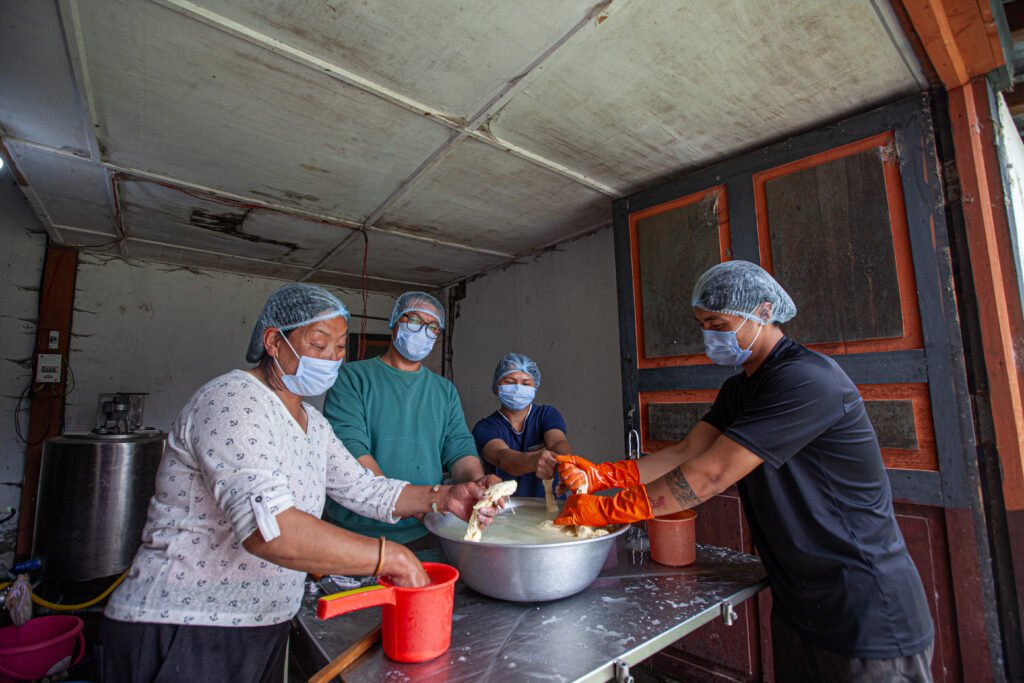
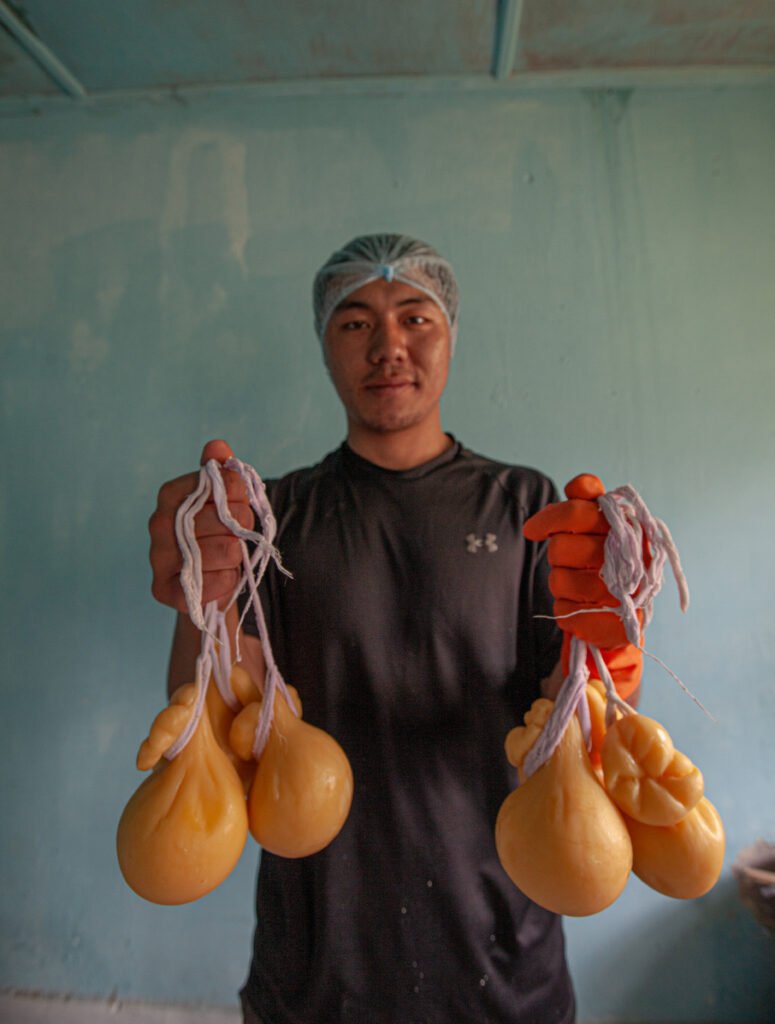
“We first collect fresh milk and heat it to 40 degrees Celsius,” he explains. “Since most people are vegetarian, we use thermophilic cultures and keep it for one hour. Then we add rennet and let it rest for 15 to 20 minutes.” After cutting the curd and removing 80 percent of the water, the cheese is rested again to improve quality. The next stage requires speed and coordination. “When it reaches 40 to 45 degrees Celsius and is ready, at least four to five workers are needed,” says Norbu. “The cheese must be made fast.”
To achieve its distinctive texture, the cheese is soaked in cold water, then brined in salt water for eight to nine hours depending on buyer preference. It is finally dried under fans for ten days before being ready for sale.
“The speciality of Caciocavello cheese is that it does not need to be eaten in a particular way—it can be used in almost any dish,” Norbu explains.
Although public awareness of Italian cheese remains limited, the product has gained recognition in premium hospitality settings such as Aman and Uma resorts. The group also promotes the cheese during festivals including the Laya Festival, Rangtse Festival, and Spring Festival. Beyond its culinary appeal, Caciocavello represents a promising opportunity to diversify income, create youth employment, and sustain Haa’s dairy-based heritage.
If you’re interested to buy the Caciocavello cheese from the family, you can contact them at #17521924